When to Use Elyra: The Agent Harness, Explained
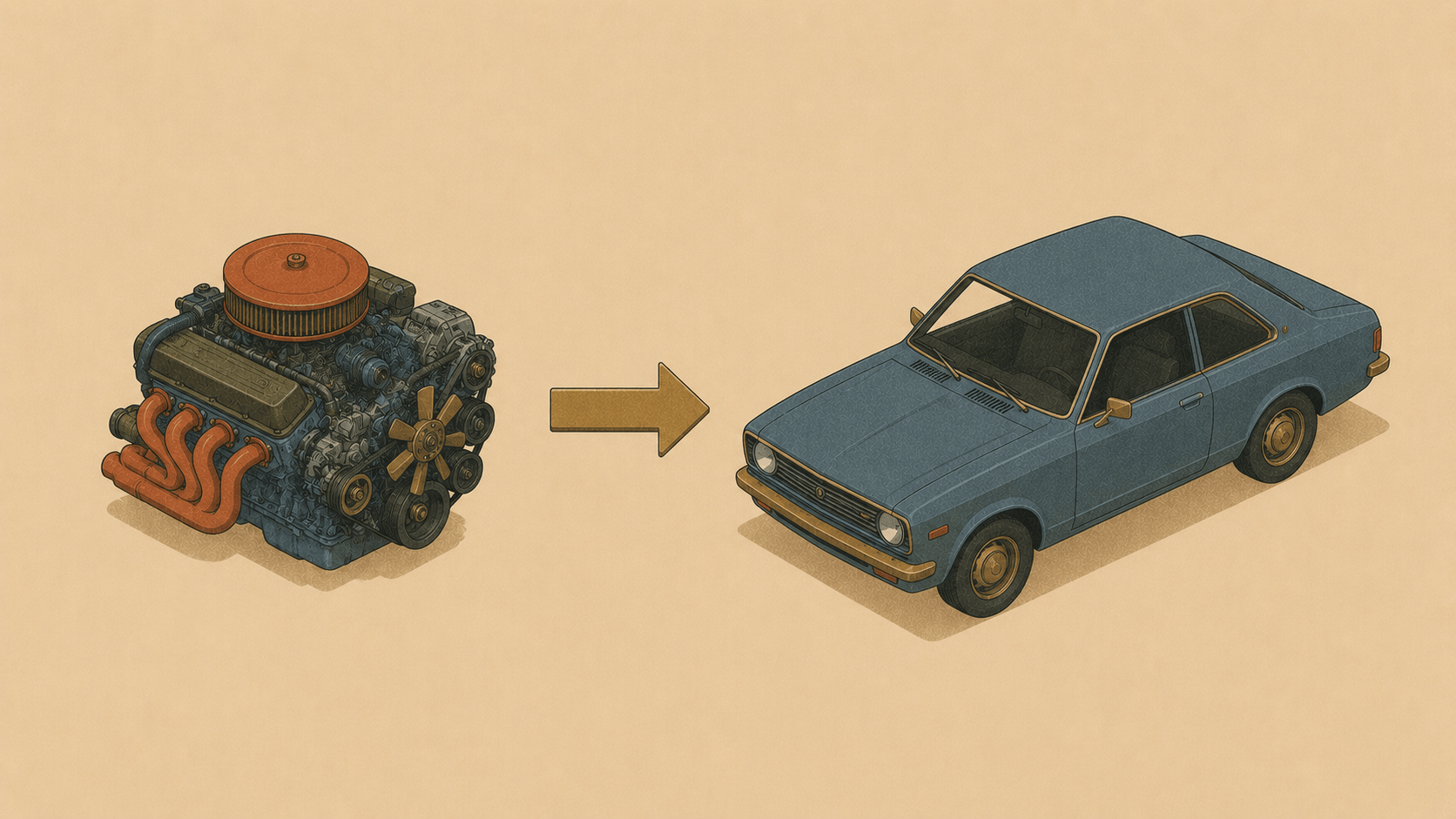
You can talk to a model directly — the same way you can drive a car by turning the alternator with your hand. The model is the engine; the agent harness is everything that turns it into something you'd actually want to drive. Here's what a harness is, why it matters more than which model you picked this week, and when reaching for Elyra is the right call.
There's a question I get a lot, usually phrased with a little suspicion: "Why do I need Elyra? I already have access to the model. Can't I just talk to it?"
It's a fair question. And the honest answer is: yes, you can talk to a model directly, the same way you can technically drive a car by turning the alternator with your hand. The model is the engine. Elyra is everything that turns the engine into a car you'd actually want to drive. That "everything" has a name in this corner of the industry: the agent harness.
This post is about what a harness actually is, why it quietly matters more than which model you picked this week, and — the practical part — when reaching for Elyra is the right call and when it isn't.
What is an agent harness?
A language model, by itself, does exactly one thing: you give it text, it gives you text back. That's it. It can't read your files. It can't run your tests. It can't remember what happened ten minutes ago unless you paste it all back in. It doesn't know what project you're in, what your conventions are, or what it's allowed to touch.
The harness is the layer that wraps the model and gives it hands, eyes, and a memory. Concretely, a harness is responsible for:
The agent loop — calling the model, executing the tools it asks for, feeding the results back, and deciding when the task is actually done instead of stopping halfway.
Tool execution — reading and writing files, running terminal commands, searching the codebase, fetching URLs — safely, and reporting results back in a form the model understands.
Context management — deciding what goes into the model's limited window: which files, which past messages, which project rules. Pruning the noise. Keeping the signal.
Permissions and safety — what the agent can do without asking, what it must confirm first, and what's off-limits entirely.
Provider plumbing — translating one consistent interface into the dozen subtly-incompatible APIs that different model vendors actually expose.
State — sessions, history, the ability to replay or resume, the memory of what was learned.
Here's the part people underestimate: the harness usually matters more than the model. A great model in a weak harness produces confident nonsense — it edits the wrong file, forgets the constraint you gave it two turns ago, and declares victory without running anything. A merely-good model in a strong harness gets real work done, because the harness keeps it honest: it makes the model verify, gives it the right context, and stops it from wandering off.
Elyra is, first and foremost, a really good harness.
What Elyra brings to the harness
Let me make this concrete, because "harness" is abstract until you see what it buys you.
One interface, every provider
Models come and go monthly. Elyra speaks to Anthropic, OpenAI, Google, xAI, Groq, Cerebras, Mistral, Z.ai, OpenRouter, the Vercel AI Gateway, and more — through one consistent interface. When a new model drops on a Tuesday, you change one string and keep your entire workflow:
elyra --model z-ai/glm-5.2
# next week:
elyra --model claude-sonnet-4-20250514
No rewiring. No new SDK. The harness absorbs the differences — the thinking-token formats, the tool-streaming quirks, the role-naming disagreements — so you don't have to.
Smart routing: the right model per turn
This is the harness flexing. Not every turn in a coding session is equally hard. Reading a file is cheap work. Designing a migration is expensive work. Elyra's smart routing classifies each turn and sends it to the appropriate tier — and you stay in control:
"smartRoutingModels": {
  "fast": "z-ai/glm-5.2",
  "balanced": "z-ai/glm-5.2",
  "powerful": "claude-sonnet-4-20250514"
}
Run /route to preview where the next turn is headed and why. Run /cost to watch your burn rate per hour. The harness is making an economic decision on every turn that a bare model literally cannot make, because a bare model doesn't know there are other models.
Knowing your project, not just your prompt
A bare model treats your codebase as a stranger. Elyra's harness gives it a home address:
/initdetects your stack — TALL, VILT, RILT, SILT, Filament, and more — writes an.elyra/AGENTS.mdwith your project's context, and suggests the right extensions.AGENTS.md files carry your conventions into every session, so the agent follows your rules instead of generic defaults.
Stack profiles (like the SILT skill for Svelte 5 + Inertia + Laravel) load deep, idiomatic knowledge so the agent writes code that fits your stack instead of code that fights it.
Real code understanding, not grep-and-pray
The harness can give the model genuine tools. Elyra's LSP extensions (@elyracode/lsp-typescript, @elyracode/lsp-php) start a real language server and hand the agent semantic go-to-definition, find-references, and diagnostics. The difference between "search for the string handle" and "find where this method is actually defined and every place it's truly called" is the difference between a refactor that works and one that breaks your app quietly.
Memory, replay, and budgets
Because the harness owns state, it can do things a single API call never could: resume a session, /replay what happened, /learn from corrections so they stick, and run a long /goal with a spending budget that caps the expensive tiers as funds run low. The harness is the only thing positioned to remember and to ration.
When to use Elyra
So here's the actually-useful part. A harness this capable is overkill for some things and essential for others. Be honest about which you're doing.
Reach for Elyra when:
The task touches more than one file. The moment a change ripples across a codebase — a rename, a new feature, a migration — you need the harness to read, navigate, and verify. This is the home turf.
You want the work done, not just suggested. Elyra runs the loop: it edits, runs your tests, reads the failures, and iterates. A chat window hands you a snippet and wishes you luck.
Cost matters over a long session. Smart routing and budgets turn an open-ended afternoon of agent work from a scary invoice into a steerable number.
You work in a real, opinionated stack. Laravel, a TALL/VILT/SILT app, a big TypeScript monorepo — the stack profiles and LSP tools pay for themselves immediately.
You'll come back to it. Sessions, replay, and learned conventions compound. The harness remembers so you don't have to re-explain.
You want to delegate breadth. Multi-agent swarms and nested subagents let you fan work out across a codebase — but only when coordination genuinely beats doing it directly (a manager costs a full session's overhead whether or not it earns it).
You probably don't need the full harness when:
You have a one-off conceptual question. "What's the difference between a left and inner join?" — just ask a model. No files, no loop, no harness needed.
You're brainstorming prose or a name. A chat window is the right tool.
You're making a single, trivial edit you could do faster by hand. Don't spin up an agent to fix a typo you're already looking at.
The rule of thumb: the more your task involves your real files, your real conventions, and more than one step, the more the harness is the point. The more it's a standalone thought, the more the harness is just ceremony.
The takeaway
The industry talks about models the way it talks about engines — horsepower, benchmarks, the new thing that's faster than last month's new thing. But you don't drive an engine. You drive a car. The harness is the steering, the brakes, the dashboard, the seatbelt, and the GPS — the unglamorous layer that turns raw capability into something that gets you to work without putting you in a ditch.
Elyra is that layer. Pick whatever engine is winning this week; the harness is what makes it actually take you somewhere.
elyra --model z-ai/glm-5.2
/init
Start there. Let the harness do the part the model can't.